Rabu, 16 Februari 2011

MODALS IN THE PAST FORM

Modals In The Past Form
Modals in the Past form dalam bahasa Indonesia adalah kata bantu pengandaian dalam bentuk lampau.
Modals in the past are :
1. Could
2. Would
3. Should
4. Shall
*Could + Verb base
We can use this expression : to offer suggestion or possibilities.
Example :
Dhina : I’m having trouble with math.
Rizki : Why don’t you ask Nuri ?
Perhaps she could help you.
*Might + Verb base
Use might to tell possibillities.
Example :
Helda : Why is Rio taking the bus to get home.
Fany : He might get a flat time.
*Would + verb base
Use would for an action that was repeated regulary in the past.
Example :
Yoan : What did you usually do on holidays ?
Lia : I would visit my grandparents In the village, but how not anymore.
*Would + Mind + V-ing
Use would to express polite request.
Example :
Mrs. Lady : Would you mind posting the letter ?
Nita : No, Not at all.
*Should + Verb base
Example :
Nisa : Ima , you should go to library now ?
Ima : O.k.
Read more »

Narrative text

Narrative Text
Someone tells a narrative text in order to entertain, stimulate emotion or to teach.
A narrative text has three elements or parts :
1. The orientation introduces main characters in a setting of place and time. It tells about : the story’s setting , the time when the story happens, and the main characters of the story.
2. The complications tells the problems of the story and how the main characters solve them. Series of events ( It includes situations, activities, or events that lead to the climax or complication. )
3. The Resolution tells the ending of the story (The complication or problem is solved here. It shows the end of the story, usually a happy ending ).
A narrative text uses the simple past tense.
EXAMPLE :

The Prince and Princess

There once was a prince who wanted to marry a princess, but it had to be a real princess. So he went all over the world looking for a real princess. Everywhere he met young ladies who told him they were real princesses, but he could never be completely sure that this was true. There was always something about them that did not seem quite right. And so, after along time, the prince went back home to his parents and was very sad.
One evening there was a terrible storm. It rained heavily and there was thunder and lightning in the sky above the royal castle. Then there was a knock at the castle gate. The old king went out to see who it could be.
A princess was standing outside the gate. The rain ran down over her hair and clothes and into her shoes. She told the king that she was a real princess, and he asked her to come inside.
“Well, said the old queen. We’ll soon find out if that is true. She went into the guest bedroom and took the mattress and blanket off the bed. Then she put a little green pea on the bed. She put twenty mattress on top of the pea, and then twenty blankets on top of the mattress. This was where the princess was going to spend the night.
The next morning the queen asked the princess how she had slept.
“Oh, it was terrible!” answered the princess. “I didn’t close my eyes all night. I don’t know what was in my bed, but I lay on something hard, and now I am black and blue all over. It was quite a terrible night”
Now, the king, the queen and the prince could be sure that this was a real princess! She had felt the little pea through twenty mattresses and twenty blankets. Only a real princess will be able to do that!
So the prince married the princess, and the pea was put in a museum for everyone to see. And, unless someone has taken it, it is still there today.
Read more »

Asking For Information

Asking Information There are a number of formulas used when asking for information in English. Here are some of the most common:
· Could you tell me…?
· Do you know…?
· Do you happen to know…?
· I’d like to know…
· Could you find out…?
· I’m interested in…
· I’m looking for..
These two forms are used for asking for information on the telephone:
· I’m calling to find out…
· I’m calling about…
Here are some sample phrases and sentences for asking information in English
1. What is this? This is a tableThis is a table
2. What is that? That is a chair.
3. What’s this? It’s a pen.
4. What’s that? It’s an apple.
5. What are these? These are pencils.
6. What are those? Those are books.
7. Where is Mr. King? He is over there.
8. Where is Ms. Knight? She’s (right) here.
9. Where’s Johnny? He’s in the house.
10. When’s the movie? It’s at 9:00.
11. When’s lunch? Lunch is at noon.
12. How is the food? It’s delicious.
Information about company
What does your company do?
What is your specialty?
What do you specialize in?
What is your main line of business?
Information about products
Could you give me some (more) information on this?
What can you tell me about this (product)?
Tell me about this one/model.
Information about Price
What are you asking for this?
What does this sell for?
How much is it?
How much does it run?
Read more »

Invitation ( written )

INVITATIONS
Most spore invitation are in the farm of question they often begin with will,would,would you like to,would you care to,etc
Offerins invitation
->Would you like to come to the restaurant this evening?
->Will you join us?
->Would you care to have dinner with us tonight?
->Could you come to a party at my place tomorrow?
->I wander whether you would care to come on a picnic with us next week?
Accepting invitation
->Yes,I’d love very much.
->Thank you.
->Yes,with pleasure.
Reffusing
->If you don’t mind,i’d rather not.
->Thank you,i’m busy,may be next time.
->I have got another appointment.
->I’m sorry.
->I’ve lost to work to do.
EXAMPLE :
Invitation Verbal
Example:
We want to invite you to come to our house
Can you come to my restaurant?
Are you free tonight?
Accepting (menerima)
I like that
That sounds good
Thank you for inviting

Refusing(menolak)
I like that but I can’t
I’m very sorry for not able to come
Sorry, I’m very busy
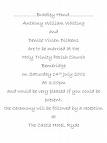
Example invitation formal :
 
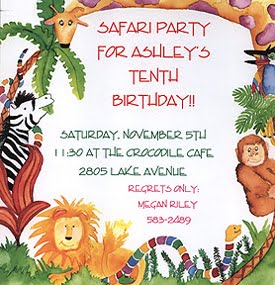
Example informal :
Read more »

Surprise & Disbelief

Suprise & Disbelief
A feeling that we feel when heard an amazing news which surprised and amazed us an expression  that we show/ say when we know /hear/see something that rather difficult to believe .Used to express something taht we cant or impossible.
To express surprise or disbelief:
  • What a surprise! That’s a surprise!
  • (Well), that’s very surprising!
  • Really?
  • What?
  • Are you serious? You must be joking!
  • You’re kidding!
  • Fancy that!
  • I must say … surprises me.
  • I  find that hard to believe.
Suprising  amazement of something :
  • Fantastic
  • It’s great
  • It’s terrific
  • Wonderful !
  • What a lovely flowers !
Example of expressing  surprise:
A: How can you say that?
B: Well, that’s the fact.
Example of expressing  surprise:
A: I can’t believe it!
B: That’s true.

When you got a surprising fact, you can say:
¨      Do you know what?
¨      Believe it or not?
¨      You may not believe it, but …
¨      Can you believe this?
You can respond to the surprising fact using these expressions:
¨      Really?
¨      Are you joking?
¨      Oh?
¨      Where? Show me.
Read more »

Direct speech & Indirect speech

Direct Speech refers to reproducing another person’s exact words or saying exactly what someone has said (sometimes called quoted speech).
We use quotation marks (“______________”) and it should be word for word.
For example:
Nicky said, “It’s hot”.
Or
“It’s hot,” Nicky said.
Indirect speech refers to reproducing the idea of another person’s words that doesn’t use quotation marks to enclose what the person said and it doesn’t have to be word for word.
Indirect speech is sometimes called reported speech.
The tense usually changes when reporting speech. This is because we are usually talking about a time in the past and obviously the person who spoke originally spoke in the past.
The verbs therefore usually have to be in the past too.
▪         Note: The reporting verbs that are usually used to report imperative sentences are: Tell, order, command, ask, warn, remind
▪         Don’t forget to mention the indirect object. Father warned me not to drive fast.
For example:
Direct speech Indirect speech
Present simple                                                                      Past simple
Vita said, “I eat fried rice.                              Vita said that she ate fried rice.
Past simple                                                                            Past Perfect
Mother said, “I went to market yesterday”.                           Mother said (that) she had gone to market the day before.
Future simple Past Future
Lea said, “I am going to wash my clothes”. Lea said (that) she was going to wash her clothes.
Dave said, “I will buy an I-Pod next week”.  Dave said (that) he would buy an I-Pod the week after.
Present continuous                                                             Past continuous
Gama said, “I am playing football”.                                        Gama said he was playing football.
Past continuous                                                                   Past perfect continuous
She said, “I was teaching earlier.”                                        She said she had been teaching earlier.
▪         When we want to report what someone said, we do not usually repeat their exact words, we use our words. We can use reporting verbs, such as tell, say, ask followed by ‘that-clause’.
Example: My mother said that she got up at 4 o’clock.
▪         When reporting verbs is in the Present, Present Perfect, or Future, there is no change of tense in the words reported.
Example: She will tell you
She says                       (that) she doesn’t know.
She has just said
In time expressions and pronouns
Direct speech Indirect speech
Now Today/tonight
Yesterday
Tomorrow
Last week
Next week
Ago
Then That day/that night
The day before/the previous day
The next/following day
The previous week
The following week/the week after
Before
This/these Here
Pronouns
That/those There
They change according to the context
Sometimes we need to report someone’s questions. The reported question are introduced with the verb ask, inquire, wonder, want to know, etc.
Type Form Examples
Yes-No questions Ask                    +  if/whether  +  subject  +  verb Wonder etc. “Do you speak English?” - He wondered if I spoke English.
Wh-questions Ask                    +  question word + subject +  verb Wonder etc. “What are you watching?” - She asked what I am watching.
Read more »

1. GRATITUDE,COMPLIMENT & CONGRATULATION

1. GRATITUDE,COMPLIMENT & CONGRATULATION
Several expressions of congratulating, complimenting, and  thanking:Congratulation ] is an expression that we use to give the congratulation utterance when he/she succeeds in doing something.
Congratulating:
  • Congratulations!
  • Congratulations on your success!
  • Happy birthday!
  • Happy Lebaran Day/Happy led!
  • Merry Christmas!
  • Happy New Year!
  • Happy Valentine!
  • Happy anniversary!
Expressing
      • Let me congratulate you
      • My congratulations on your success
      • Pretty good
Responding
      • Thank you
      • Thanks, I needed that
      • It’s very kind of you to say that
      • Do you really think so ?
Compliment ] is an expression that we show or say to express/give praise. Some people use compliments to “butter up” somebody or to flatter in order to increase good will, for example:
  • on his/her general appearance
  • if you notice something new about the person’s appearance
  • when you visit someone’s house for the first time
  • when other people do their best
Complimenting:
  • What a nice dress!
  • You look great.
  • You look very nice/beautiful/handsome.
  • I really must express my admiration for your dance.
    • Good grades!
    • Excellent!
    • Nice work!
Gratitude ] is an expression that we show or say to express grateful feeling to other people. When speaking English, you say “thanks” very often. Please say “thank you” when people give you something, help you do something, wish you something and give you a compliment etc.
Thanking:
  • Thank you very much
    • Thank you for your help
    • I’m really very grateful to you
    • You’re welcome
    • Don’t mention it
    • It’s a pleasure / My pleasure
    • I want to express my gratitude to (my teacher, my father, etc)
    • I am grateful to your help
Read more »

Pengikut

 
Powered by Blogger